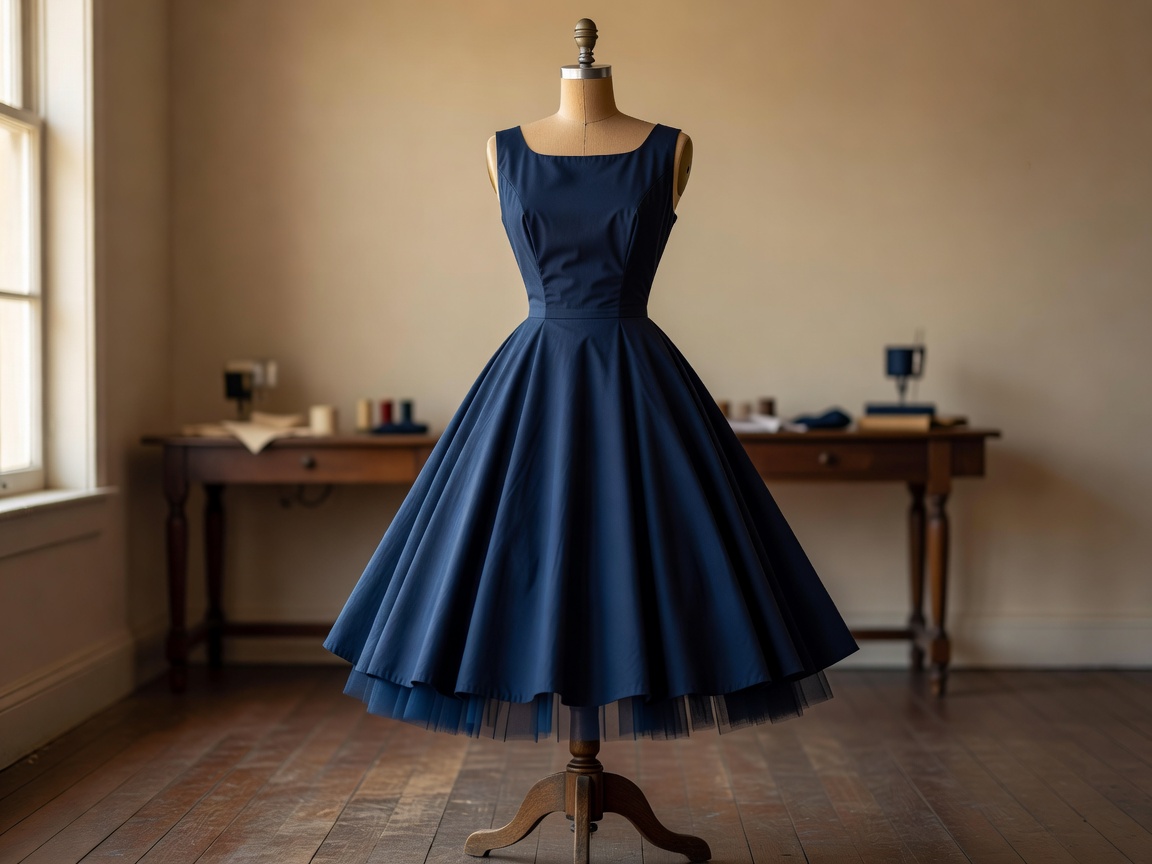
Reading a shape on the hanger and on the body
Hangers distort silhouettes. A 1930s bias-cut gown looks limp until it is on a form, and an unpadded 1980s jacket can look ordinary if its shoulder pads were removed by a later owner. Look for small evidence of changes: snaps where pads once sat, holes from a removed belt loop, or a hem with a deeper crease line showing it was once longer. Hems were shortened constantly, especially in the 1960s, so a mini length on an older dress may be a later alteration.
Shoulders are a useful axis. Natural or sloping shoulders appear in the 1900s, the 1950s and much of the 1970s. Built-up shoulders mark the late 1930s and 1940s and return, larger, in the 1980s. The 1940s versions tend to be neater and set into a fitted bodice; the 1980s versions are often wider, softer and paired with a looser body. That comparison is a tendency, not a rule.
Waist placement is another axis. Dropped waists dominate the mid-1920s; natural waists rule from the 1930s to the late 1950s; empire lines rise in the late 1960s; then waists become relaxed or belted through the 1970s. If a garment combines features from different decades, consider that it may be home-sewn from an older pattern, a later revival, or altered.
Menswear moves more slowly
Men's tailoring changes in smaller steps: lapel width, trouser rise, pleats and cuffs. The 1940s favoured high-rise, wide trousers and broad lapels; slimmer cuts arrive in the late 1950s and 1960s; lapels and ties widen again in the 1970s. Because the steps are small, construction and labels matter even more for menswear dating than for womenswear.
From shape to estimate
Write your estimate as a range with reasons: "Late 1940s to mid-1950s, based on the full skirt and natural waist; check zipper and label." That habit keeps you honest when a seller or an online listing announces a single year with confidence. Once you have a range, continue with the evidence in What a Label Can Tell You, then see how to wear the reference.