Guide 04 · Care

Care for an Older Garment

Old clothing has already survived decades of wear and storage. These checklists help it survive the next ones, using the principles museum conservators apply, adapted for a home wardrobe.

Begin with an inspection

Preservation starts with the same close look we use for dating. Lay the garment on a clean, flat surface in good daylight and check it section by section: underarms, collar, waist seam, hem, fastenings and lining. Note stains, splits, weak stitching, shattered silk, flaking prints, rust near metal parts and any small holes that might indicate insects. Write these down. A record of condition helps you choose treatment and notice new damage later.

Guidance from the Victoria and Albert Museum, the Canadian Conservation Institute and the American Institute for Conservation agrees on one principle: do the least that solves the problem. Many vintage pieces are better aired and stored properly than washed.

When to stopSignificant, fragile or valuable garments, especially couture, beaded 1920s pieces or anything with documented history, deserve advice from a professional textile conservator before cleaning or repair.
Preservation checklists

Four checklists for the cabinet

Before wearing

  • Check seams and fastenings under tension.
  • Reinforce loose buttons and hooks.
  • Use dress shields or a slip under silks.
  • Apply perfume and deodorant before dressing, and let them dry.

Storage

  • Store clean; stains attract insects and set over time.
  • Keep heavy, beaded, knitted and bias-cut pieces flat.
  • Pad folds with acid-free tissue.
  • Use padded hangers for sturdy pieces; never wire.
  • Choose breathable cotton covers, not plastic.

Cleaning

  • Read fiber content and test on a hidden area.
  • Air and gently brush before deciding to wash.
  • Support wet garments; water adds weight.
  • Dry flat away from heat and direct sun.
  • Tell dry cleaners the garment's age.

Pests and environment

  • Inspect wool, silk and fur seasonally.
  • Look for webbing, casings and fine holes.
  • Keep storage cool, dark and steady.
  • Avoid attics, basements and exterior walls.

Fiber by fiber

Silk. Some silks from the late nineteenth and early twentieth centuries were "weighted" with metallic salts to add body. Over time this weighting can make silk split in straight lines, a condition known as shattering. It cannot be reversed; the aim is to slow it by avoiding stress, light and folding along the same lines.

Rayon. Early rayons, common from the 1920s to the 1950s, can lose strength when wet and may shrink noticeably. Many conservators recommend avoiding home washing for older rayon unless a test patch behaves well.

Acetate. Acetate linings and dresses can be damaged by acetone, the solvent in many nail polish removers, and are sensitive to heat. Keep irons cool and pressing cloths in use.

Wool and fur. These attract clothes moths, such as the webbing clothes moth Tineola bisselliella, and carpet beetles. Regular inspection, cleaning before storage and sealed storage of cleaned items are more reliable than cedar or lavender on their own.

Early synthetics and coatings. Foam backings, early vinyl and some polyurethane-coated fabrics break down chemically and can become sticky or flaky. Isolate them from other pieces.

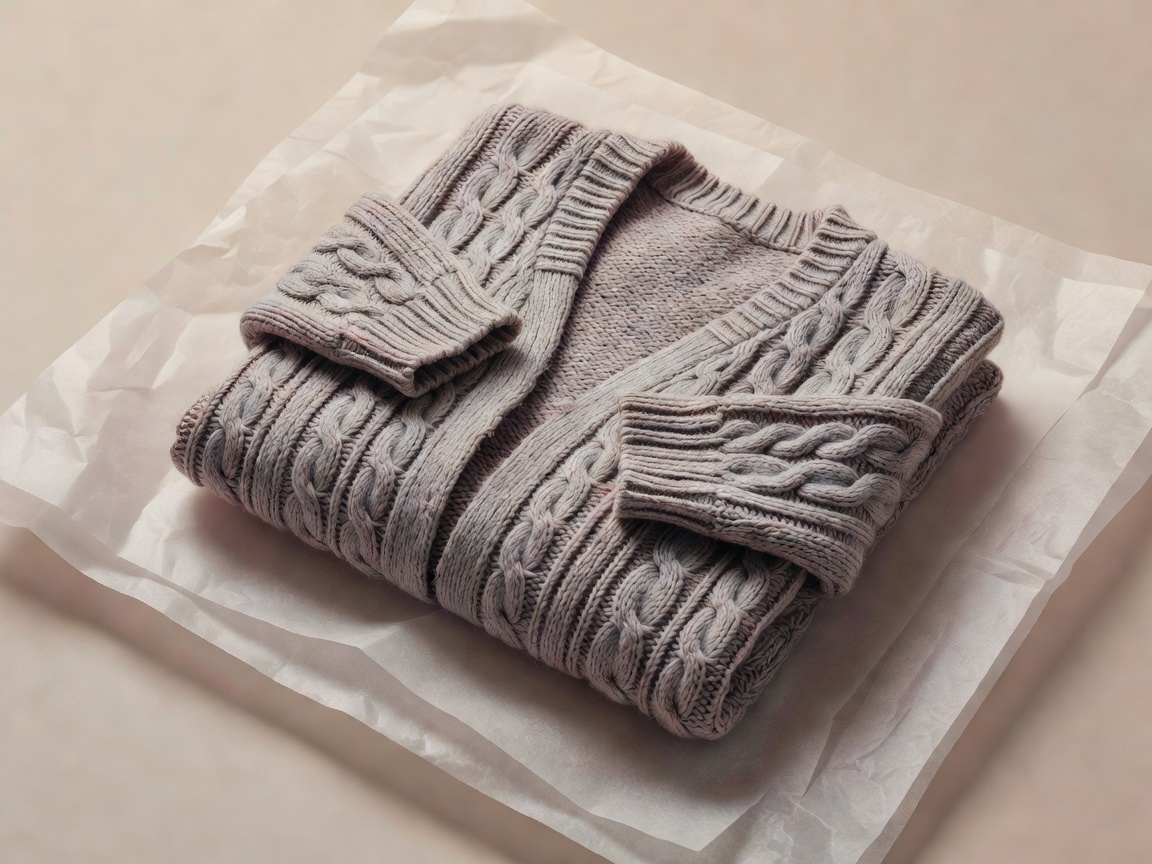
Soft-lit 3D render of a folded knit cardigan padded with acid-free tissue in a storage box
Rendered object study: knits stored flat with tissue padding at the folds, so the weight of the garment does not stretch the shoulders.

Light, heat and humidity

Light fades dyes and weakens fibers, so keep stored garments in the dark and rotate any you display. Aim for a cool room with steady humidity; many conservation guides suggest a moderate relative humidity of roughly 40 to 60 percent and warn that rapid swings cause more harm than a slightly imperfect stable level.

Figures vary by source and object. Treat them as a target range, not a strict specification.

Repairs that respect the object

Good repairs are visible on close inspection, reversible where possible and done with materials similar to the original. Use fine thread in a matching fibre, support weak areas from behind with a lightweight fabric, and avoid iron-on patches and fabric glue, which are difficult to remove and can stain. If a zipper fails on an ordinary garment, replacing it is reasonable; keep the original zipper in a labelled envelope with the garment, because it is part of the evidence of age.

Finally, keep notes. A small card in the storage box recording where you bought the piece, what the label said, how you estimated its date and what you cleaned or repaired turns a single garment into a documented object. Future owners, and future you, will be grateful. Questions about a particular piece can go through our inquiry tool.